

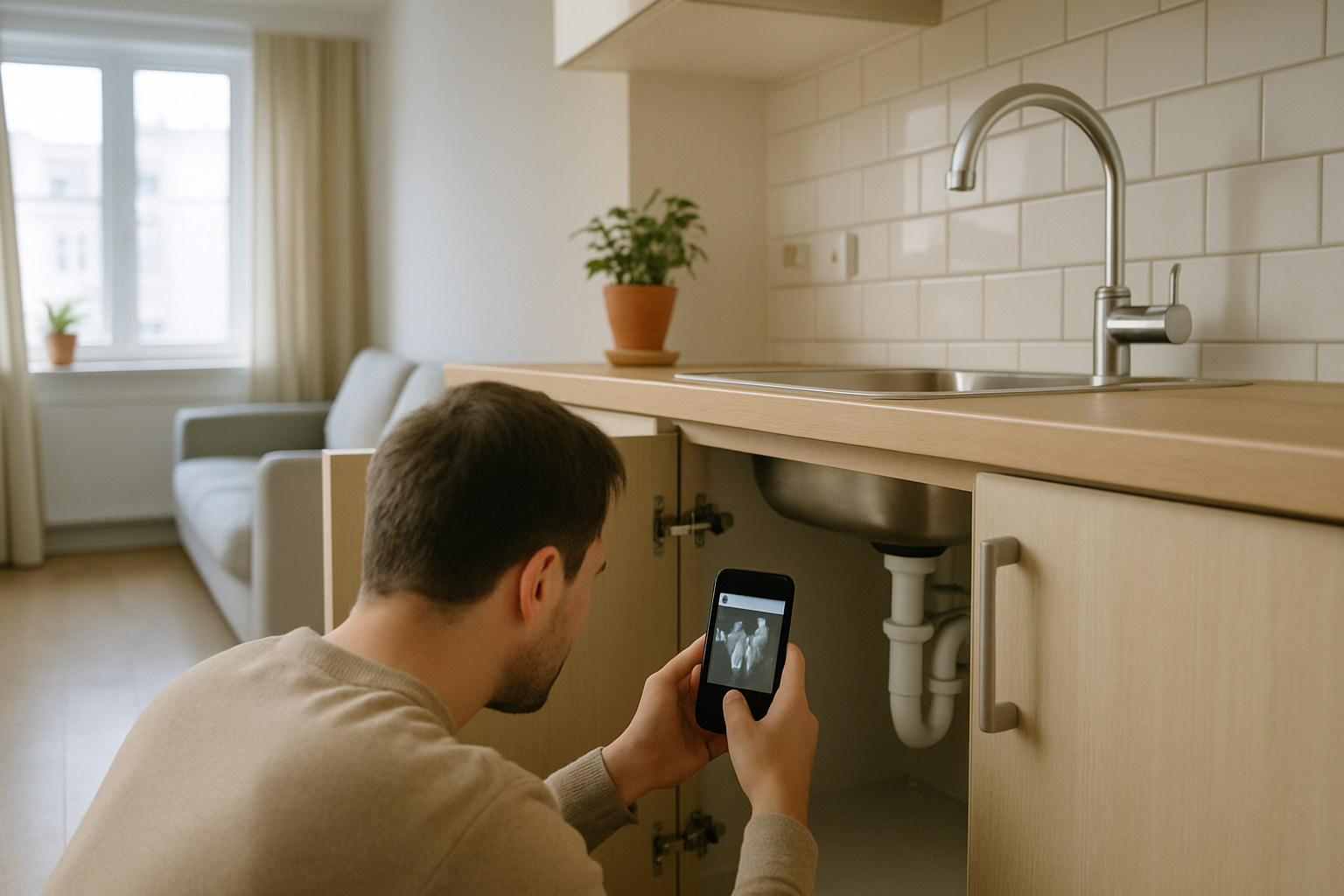
When you discover a fault in a rental apartment, first assess whether it is a routine problem or an urgent situation that threatens people or property. Then document the fault and report it to the landlord as soon as possible using the agreed method.
Do not automatically attempt the repair on your own. Responsibility for the repair, the choice of tradesperson, and payment of the costs may depend on the lease, the cause of the fault, and the specific circumstances.
First distinguish a routine fault from an urgent incident
A routine fault may include malfunctioning equipment, a dripping tap, or damage that is not spreading immediately and does not pose an immediate danger. Even such a problem should be reported without unnecessary delay.
A situation is urgent if it may endanger health or life, or if the damage may increase rapidly. Examples may include a significant water leak, smoke, the smell of gas, sparking, or another dangerous fault.
In such a case, act safely above all. Depending on the nature of the incident, contact the appropriate emergency repair service or emergency line. There is no universal procedure: the appropriate response depends on the source of the danger, the condition of the apartment, and what can be done without risk. Do not take any action that could endanger you or others.
If it is safe, take only reasonable steps to limit further damage. Inform the landlord or property manager as soon as the situation allows.
What to record immediately after discovering the fault
An accurate record will help the landlord understand the problem, choose an appropriate next step, and reduce the risk of later misunderstandings.
- Date and time: when you discovered the fault and, if applicable, when it first appeared.
- Location: the room and the specific part of the apartment or equipment.
- Signs of the fault: what is not working and what you can hear, see, or smell.
- Extent of the damage: which surfaces, objects, or appliances are visibly affected.
- Development of the problem: whether the condition remains unchanged, recurs, or is getting worse.
- Steps taken: what you safely did to limit further damage.
Photographs and a short video
Take an overall photograph of the location and several close-up shots. If the fault involves movement, sound, or occurs intermittently, a short video may help.
Do not capture sensitive data, documents, screens displaying personal information, or identifiable people. Keep the original files and do not significantly edit them.
How to write a report to the landlord
The report should be brief, specific, and calm. Instead of guessing the cause, mainly describe what you observed directly.
The message should include:
- the exact location and a brief description of the problem,
- the date and time it was discovered,
- information on whether the fault is getting worse or recurring,
- the risk of further damage or restrictions on using the apartment,
- an overview of the steps you have already taken safely,
- a reference to the attached photographs or video,
- the times when you are available and can provide agreed access,
- a request for confirmation of receipt and information about the next steps.
Universal message template
Hello, today, [date], at [time], I discovered the following problem in [location in the apartment]: [brief description of the signs]. The fault is [not getting worse, getting worse, or recurring] and may cause [brief description of the risk, if clear]. To limit further damage, I safely took the following steps: [steps]. I am attaching photographs or a video. I am available [times and contact method]. Please confirm receipt of this message and let me know how we will proceed.
This is a practical communication template, not a legal document. Adapt it to the situation and the reporting method agreed in the lease.
Check the documents and contact details before arranging a repair
Review the lease, building rules, and any available instructions from the property manager. In particular, check:
- who should receive fault reports and how they should be submitted,
- whether separate contact details are provided for urgent incidents,
- whether you need to contact the landlord, property manager, or another designated person,
- how access to the apartment for a tradesperson is arranged,
- what rules have been agreed for repairs and costs.
It is not possible to determine generally who must arrange or pay for every repair. This may depend on the lease, the origin of the fault, how the apartment was used, and other circumstances.
Can a tenant arrange a tradesperson independently?
Doing so without prior agreement may lead to a dispute over the choice of contractor, the scope of work, or payment. For a routine fault, therefore, first ask the landlord for instructions and retain their consent in writing.
An urgent incident may require quick action, but the appropriate procedure depends on safety and the specific circumstances. If possible, use the agreed emergency contact and record whom you contacted, when, and why.
What to do after reporting the fault
- Keep the communication: messages, emails, photographs, videos, and confirmations of receipt.
- Record dates: when you reported the problem, when you received a response, and what procedure was agreed.
- Monitor developments: if the condition worsens or a new risk arises, send an update.
- Arrange access: confirm the visit time and provide access under the agreed conditions.
- Check the result after the repair: verify whether the fault has been resolved and whether the work has left any further damage.
After completion, retain the message about the result, the agreed date, any documentation of the work, and photographs of the condition after the repair. If the problem persists, report it factually and without delay.
What if the landlord does not respond?
First send a brief reminder. State the date of the original report, the current condition, and whether the risk has changed. Ask for confirmation of receipt and information about the next steps.
If there is no response, use another contact agreed in the lease or provided for management of the apartment. This may be another contact for the landlord, the property manager, or a designated emergency repair service.
For a persistent or serious problem, consider seeking individual professional advice. The appropriate solution depends on the lease, the seriousness of the fault, the communication to date, and the specific circumstances.
The most common mistakes when reporting a fault
- Delaying the report: the problem may worsen, and proving its original extent may become more difficult later.
- An incomplete description: saying “it is broken” is not enough to assess the situation.
- Arranging a repair without authorisation: without an agreement, a dispute may arise over the procedure or costs.
- Discarding damaged parts: document them first and agree on what should be done with them.
- Emotional communication: accusations and assumptions make resolution more difficult. Stick to observable facts.
- Risky intervention: do not try to repair equipment if you do not have the necessary skills or could endanger yourself.
Tenant’s checklist
- Assess whether the situation poses an immediate threat to people or property.
- In an urgent incident, act safely and contact the appropriate emergency repair service or emergency line based on the nature of the problem.
- If it can be done without risk, limit further damage.
- Record the date, time, location, signs, and extent of the damage.
- Take photographs or a short video without sensitive data or identifiable people.
- Check the lease, building rules, and property manager’s contact details.
- Send the landlord a factual report and request confirmation.
- Do not arrange a routine repair without agreeing on the next steps.
- Keep the communication and record agreed dates.
- After the repair, check the result and confirm whether the problem has been resolved.
Frequently asked questions
Is it enough to report the fault by phone?
A phone call may be useful, especially for an urgent problem. It is practical to follow up with a brief written summary so that there is a record of the fault’s description, the time it was reported, and the agreed procedure. Follow the communication method stated in the lease.
What if I do not know the cause of the fault?
Do not guess the cause. Describe the observable signs, location, time, and development of the problem. A person agreed with the landlord or property manager can carry out a professional assessment.
Should minor damage also be documented?
Yes, a brief record can also be useful for a minor problem. It will help monitor whether the condition worsens and clarify when you discovered and reported the damage.
What should I keep after the repair?
Keep the communication, visit dates, photographs taken before and after the repair, and available information about the work performed. If the fault has not disappeared, record any further signs and report them again.